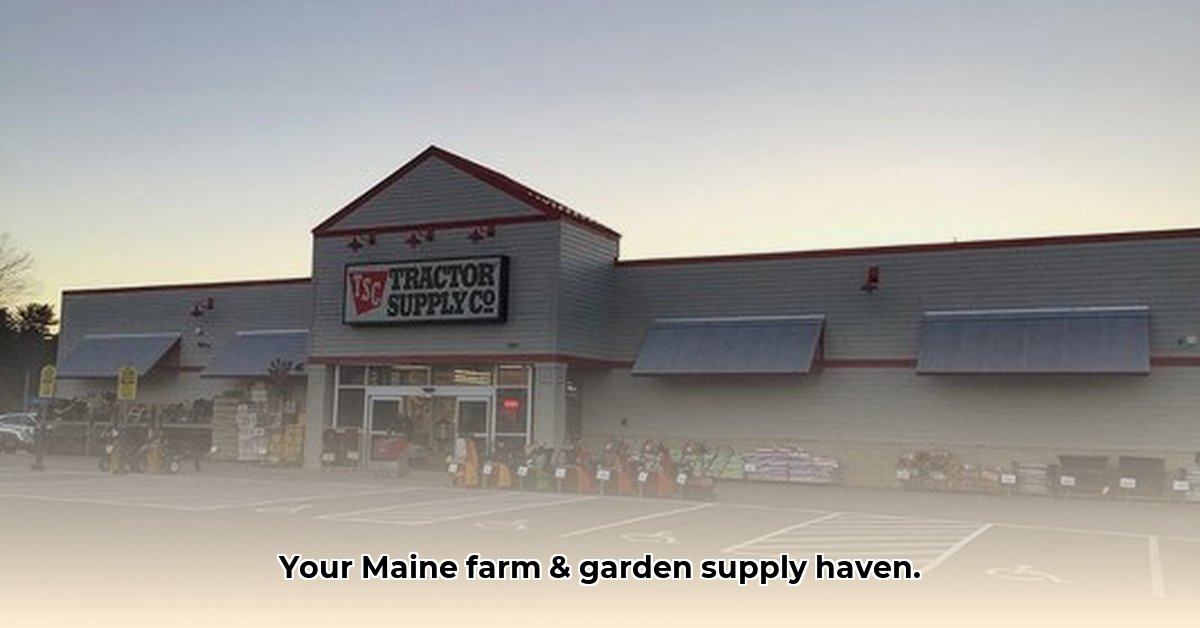
Tractor Supply Brunswick, Maine: A Case Study in Sustainable Retail Practices
Tractor Supply Company (TSC) in Brunswick, Maine, occupies a unique position within the community, serving the needs of farmers, gardeners, and pet owners alike. This case study examines TSC Brunswick's role in promoting or hindering sustainable agriculture within its locale, analyzing its environmental and social impact, and proposing actionable steps for improvement. The study highlights the existing data gaps and emphasizes the necessity for increased transparency within the industry. For comparative analysis, see this similar case study.
Understanding Tractor Supply's Environmental Footprint in Brunswick
Assessing TSC Brunswick's environmental impact requires a comprehensive analysis currently hampered by a lack of publicly available data. Information on energy consumption, waste management strategies, and the environmental footprint of its supply chain remains limited. This lack of transparency presents a significant challenge in evaluating the store's overall sustainability performance. "We need to move beyond anecdotal evidence and towards quantifiable metrics," says Dr. Eleanor Vance, Professor of Environmental Science at the University of Maine. "Without detailed data on energy use, waste production, and the sourcing of products, any assessment will remain incomplete." For example, the environmental impact of fertilizers and pesticides sold by TSC remains largely unknown. A thorough environmental audit is crucial to establish a baseline and identify areas for improvement.
How much energy does the store consume annually? What percentage of its waste stream is recycled or composted? These simple yet crucial questions require answers to accurately assess its environmental impact. The carbon footprint of its supply chain – considering transportation, production, and packaging – requires rigorous analysis.
The Social Impact of Tractor Supply in Brunswick
TSC Brunswick's role within the community extends beyond its product offerings. Its influence on local farmers and gardeners warrants careful consideration. Does the store actively source products from local producers? Does it engage in community initiatives supporting sustainable agricultural practices? What is their percentage of local products to total inventory? These questions are crucial to evaluating the store's social sustainability. A significant finding would be the actual percentage of locally sourced goods. “Community engagement is critical,” notes Sarah Miller, Executive Director of the Maine Sustainable Agriculture Network. "A truly sustainable business needs to actively support its local farmers and contribute to the economic vitality of the region." Further research, including surveys and interviews with local farmers and customers, is needed to build a fuller picture of its social impact.
Actionable Steps Towards Sustainability at TSC Brunswick
Moving towards a more sustainable future requires a multi-pronged approach, involving TSC itself, consumers, and the local government. The following actionable steps, organized into short-term and long-term goals, aim to address the identified challenges.
Short-Term Goals (Within 1 Year):
- Conduct a comprehensive environmental audit: Assess energy consumption, waste generation, and water usage. Target: Reduce energy consumption by 15% within the first year.
- Increase sustainable product selection: Expand the range of organic fertilizers, sustainably sourced pet food, and other eco-friendly products. Target: 20% increase in sales of eco-friendly products.
- Launch a consumer education campaign: Educate customers about sustainable practices through in-store displays, workshops, and partnerships with local organizations. Target: 10% increase in customer participation in sustainability initiatives.
- Explore renewable energy options: Investigate the feasibility of transitioning to solar or wind power. Target: Complete a feasibility study within six months.
Long-Term Goals (Within 3-5 Years):
- Develop a localized sustainability plan: Create a detailed plan tailored to the Brunswick store, considering local resources and consumer preferences. Target: Complete a comprehensive sustainability plan by year 2.
- Expand local sourcing: Prioritize sourcing products from local farmers and producers. Target: Increase locally sourced products by 50% within five years.
- Implement advanced waste management: Adopt composting and robust recycling programs to minimize waste. Target: Reduce landfill waste by 30% within three years.
- Foster community partnerships: Collaborate with local agricultural organizations, farmers, and community leaders to support sustainability efforts. Target: Establish partnerships with at least three local organizations within two years.
Benchmarking Tractor Supply Against Competitors
A direct comparison with other rural retailers in Maine is necessary to contextualize TSC Brunswick's performance. This comparative analysis will highlight best practices and reveal areas where improvements are required. Benchmarking against the most sustainable competitors can provide concrete targets for future action. Factors such as supply chain transparency, employee training on sustainability, and community engagement should all be considered in this analysis.
Mitigating Risks and Fostering Collaboration
TSC Brunswick faces several challenges, including supply chain disruptions, changing consumer demand, and competition. Proactive strategies are crucial. Building relationships with reliable local and regional suppliers, adapting product offerings based on market demand, and embracing transparent communication with its customer base are essential mitigation strategies. Collaboration with local farmers, community leaders, and the local government is crucial for long-term success; together, they can create a more sustainable future for Brunswick. The collective effort of all stakeholders is essential for making TSC Brunswick a model for sustainable retail in rural communities across the nation.